Stock
How to do a stock take in a cosmetics shop (and why to count blind)
A stock take is the only moment the shelves tell you the truth. Done well, it fixes the numbers your reorders and reports depend on, and shows you where stock keeps slipping away. Done badly, it just copies the system’s mistakes back into the system.
By The Zero POS teamChecked 6 min read
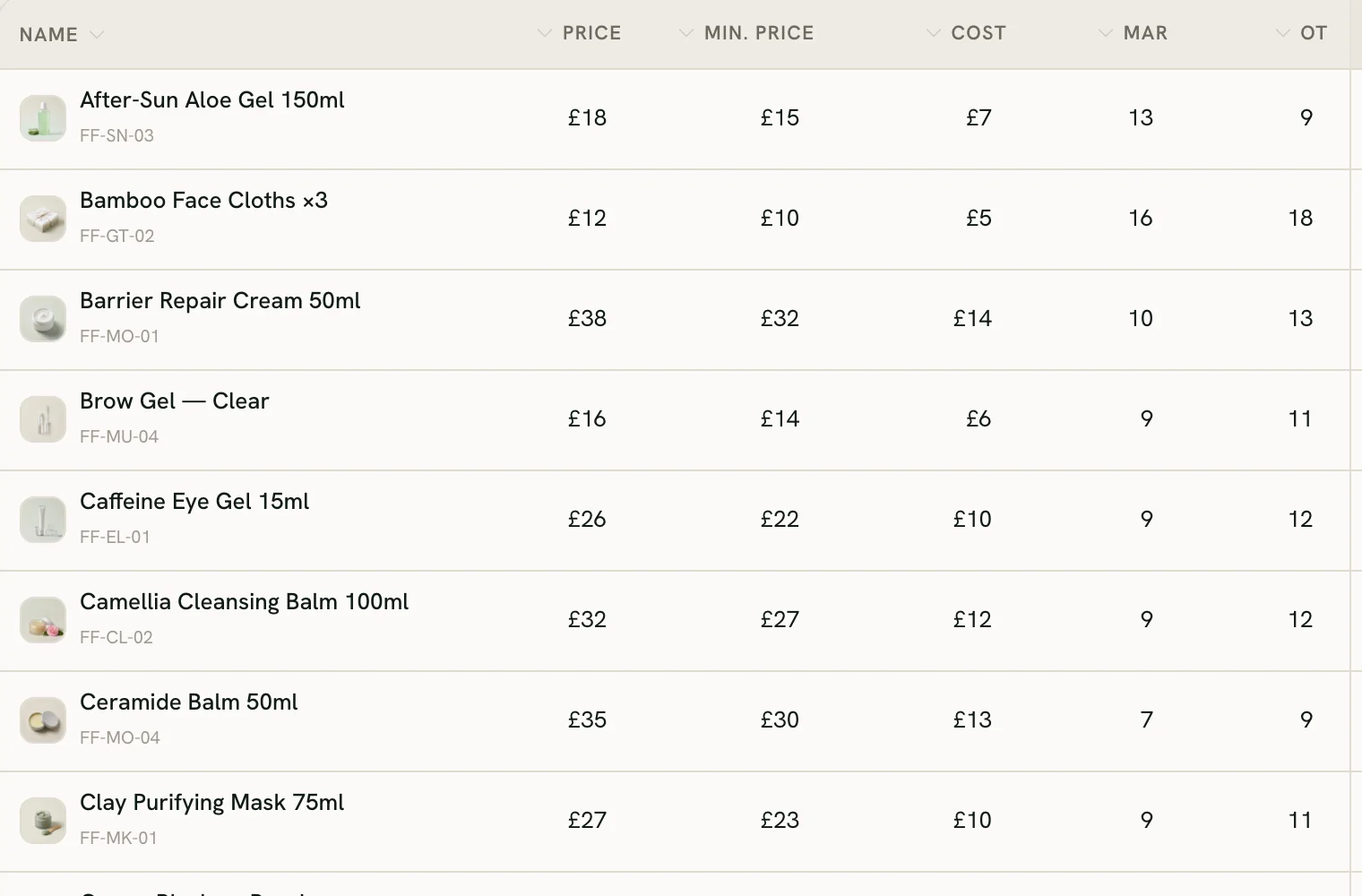
Every product’s stock, shop by shop. A stock take is how these numbers are kept honest.
What a stock take is really for
Every day the stock figure drifts a little away from the shelf. A sale goes through on the wrong shade. A tester is opened and nobody writes it down. A box arrives with one jar cracked. A delivery is counted in a hurry. Now and then something walks out of the door. None of it shows until somebody counts.
A cosmetics shop feels this more than most. You carry many small, similar items: the same serum in two sizes, one foundation in fourteen shades, lipsticks that differ by a single digit on the barcode. They are easy to mix up at the till and easy to pocket. A count that is out by a few units on dozens of lines adds up to real money, and to customers told “we have it” when you don’t.
So a stock take has two jobs. The first is to correct the numbers, so reorders, low-stock warnings and the value of your stock are right again. The second is to learn: which products keep coming up short, in which shop, and why. The first job is done the day you count. The second only works if you count the same way every time and keep the results.
When to count
There are two rhythms, and a shop usually needs both. A full count covers every product in the shop at once; it takes a closed shop or a long quiet morning, so it happens a few times a year. A rolling count covers one area at a time, a shelf or a brand, every week or so, until you have been round the whole shop. Rolling counts catch problems while they are small and while people still remember what happened.
Whatever the rhythm, count when nothing is moving. Every sale made while you count changes the figure your count will be compared with. Before opening, after closing, or one quiet area while the rest of the shop trades, all work. A busy Saturday afternoon does not.
Count the expensive and fast-moving lines more often than the rest. A slow-selling body lotion can wait for the full count; a premium serum that sells every day, and fits in a pocket, deserves a look every week.
Get the shop ready first
A difference found in a stock take is often not theft but paperwork that never happened. Clear it before you start, or you will spend the afternoon chasing ghosts.
- Receive every delivery that has arrived, so the stock it brought is on the books.
- Record every transfer to or from another shop or the storeroom.
- Record the testers you have opened and the damaged stock you have put aside since the last count.
- Put returns and anything waiting to be collected somewhere separate, and decide whether it counts.
- Tidy the shelves so each product sits in one place, shades together, back stock labelled.
- Split the shop into areas small enough to finish in one go, and agree who counts which.
Decide, too, what you are counting. Sealed, sellable stock only: open testers are not stock any more, and a damaged box that cannot be sold should already have been written off. Counting them as stock only hides the loss for another season.
Why to count blind
A blind count means the person counting cannot see what the system expects. They write down what is on the shelf, and only afterwards is it compared.
It sounds like a small thing. It is the whole point. Someone who can see that the system expects six jars will, often without meaning to, find six: they stop looking once the number matches, or they assume the seventh jar belongs to another line. A count that agrees with the system because it was steered by the system tells you nothing, and it buries the very differences you were counting to find.
Counting blind also takes the pressure off the counter. Nobody is checking their own work against a number that might make them look bad. They count what they see; the comparison is somebody else’s job, done afterwards, in the open.
How to count, area by area
Start one area and finish it before moving on: front shelf, back stock and any drawer for those products, together.
Work in a fixed order, top to bottom and left to right, so nothing is counted twice or missed.
Count by the exact item: the shade, the size, the barcode. Two shades of the same lipstick are two lines.
Count units, not boxes. A sealed box of twelve is twelve, but open it if you are not sure it is full.
Leave a line blank if you did not count it. Write 0 only when the shelf is really empty: a blank and a zero mean very different things.
Note who counted and which shelves, then hand the area in before starting the next.
If two people are available, let the second one recount any line that comes out different, without seeing the first count. Agreement between two blind counts is worth far more than one count checked against the system.
On paper, a clean sheet with a column each for the count, the testers and the damaged keeps the three apart; our free stock-take count sheet is laid out that way, one area at a time.
What to do with the differences
When the counts go in, you get three numbers for every line: what the system expected, what was counted, and the difference. Before you accept anything, look for the boring explanations, because they are usually right.
- Two similar products out by the same amount in opposite directions: one was sold as the other at the till.
- A product short by exactly the number of testers on the shelf: the testers were never recorded.
- A whole delivery’s worth missing or extra: the delivery or a transfer was not recorded, or was recorded twice.
- A large difference on one line only: recount it before anything else.
Once the explainable differences are explained and the recounts are done, apply the count, so the stock figure matches the shelf again. Then put the result away somewhere you will look at it next time. One count shows a difference; three counts in a row showing the same product short, in the same shop, show a problem. Value the differences at cost, not at the shelf price: that is what the shop actually lost.
Write down what you changed on the day, too. A short note saying who counted, which areas and what was explained saves an argument a month later.
Doing it in Zero POS
Record opened testers and damaged stock before you count, with mark tester or damaged, so they don’t show up as missing. To put one number right between counts, use a stock adjustment with a reason. The whole of stock control, from transfers to deliveries, is on its own page.